
Why we bring flowers
The gift that doesn't pretend to last

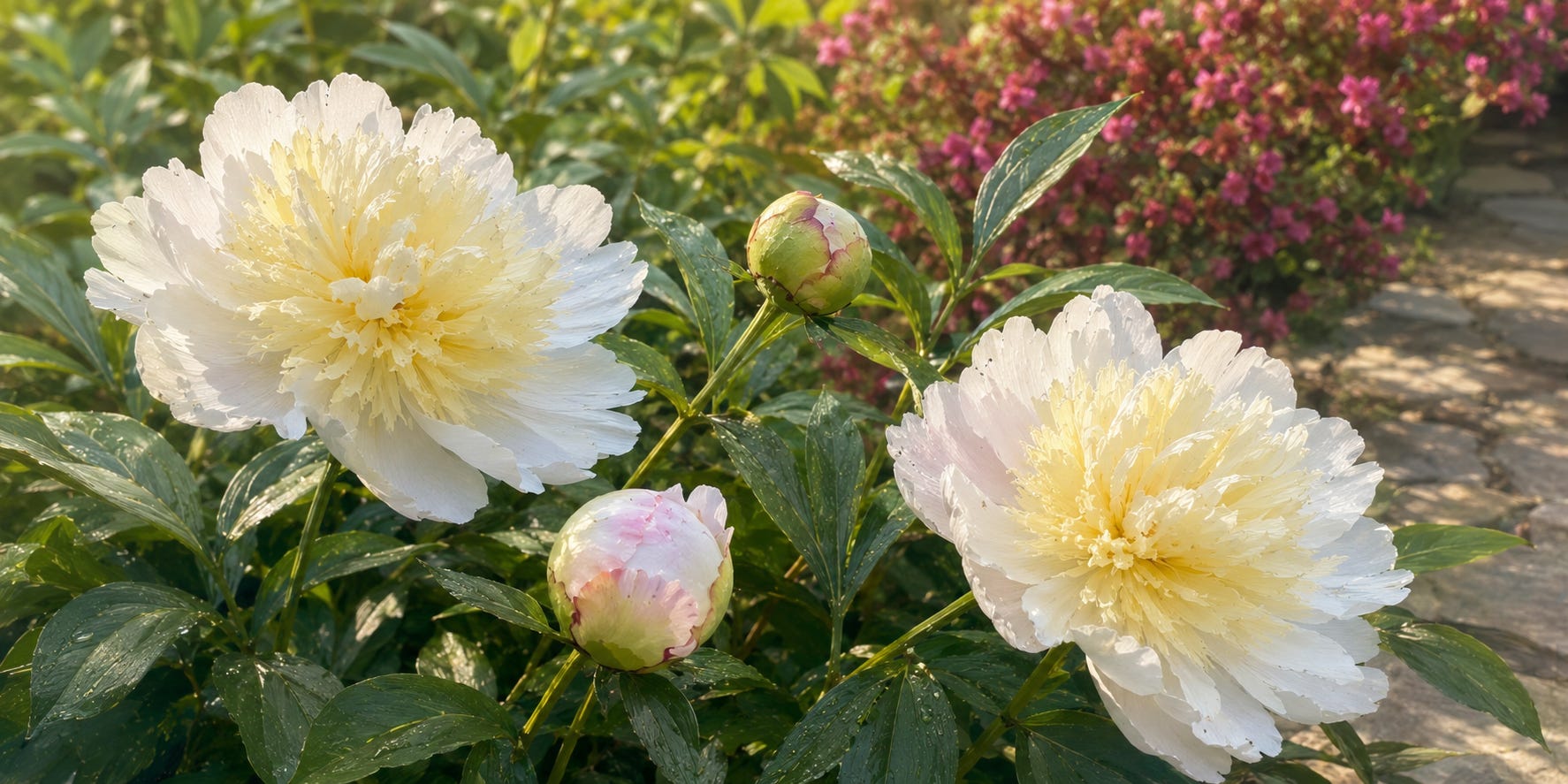
In my neighborhood, we’re in peony season. Each morning walk takes me past them.
In some spots, tight buds are only beginning to loosen. In others, these long-lived, deeply rooted plants are waving full blooms.
And in some yards, they have already shed the year’s petals one by one.
It’s a short season. A peony gives you a week, perhaps a little more if the weather allows.
Then the heavy heads tip, the petals drop, and the ground beneath the plant is scattered with pink or white. It’s the most ordinary sight in the world, and still it stops me.
This is the season of flowers. And for many families, it’s a time to take flowers to the dead.
Memorial Day weekend is here. Across the country, many people will do what they have done for generations. They’ll drive to a cemetery, find a particular stone, and leave flowers on the grave.
You could say it’s an odd thing to bring. Why not choose something built to last, like a stone or a coin? Something that would still be sitting there next year, and the year after that.
Instead, we bring the most perishable beautiful thing we own. Cut flowers, already dying in our hands. Lovely and fading in the same moment. We arrange them carefully against the headstone, knowing they’ll be brown by the end of the week.
This isn’t a new custom. People have laid flowers on graves for as long as there have been graves, in nearly every part of the world. It’s among the oldest things we know how to do for the dead.
I’ve come to see that the fading is not a flaw in the gift. The fading is the gift.
A cut flower makes no promise of forever. It can’t, and it doesn’t try. When we lay flowers on a grave, we aren’t pretending that anything here lasts. We’re offering a gift we know is temporary and offering it anyway.
The flower says the thing we find so hard to say in words.
I can’t make this last. But I can do this, for you, today.
Last week, I wrote here about perpetual care. The word perpetual, I admitted, puzzles me because it promises more than any cemetery can truly keep.
A flower makes a smaller, truer promise. It doesn’t reach for forever. It offers what it can: a little beauty, freely given, for as long as it lasts.
In some parts of the country, that small gesture has been gathered into something larger.
There are communities that still honor a practice called Decoration Day, the custom that grew into the Memorial Day we commemorate this weekend.
Decoration Day is a time for families to return to a small cemetery, usually in the country. They clear away the weeds, straighten the leaning stones, and decorate the graves with flowers.
They know the flowers will fade. They know they’ll need to come back next spring and do it all again.
That return is perpetual care in its truest form — people willing to come back, season after season.
The peonies understand this better than I do.
A peony bloom doesn’t last. But the plant beneath it can outlive the gardener who planted it, rising in the same spot for fifty years and sometimes longer.
The fleeting flower and the faithful return come from the same plant: the thing that doesn’t last, and the thing that keeps coming back.
Perhaps that’s why, of all our customs around death, this is one that stays.
We’ve let go of so much in our culture. We no longer honor long periods of mourning. We don’t wear black armbands or hang a wreath on the door.
But we still bring flowers. Maybe we reach for flowers when we’ve run out of words, because flowers say what words can’t.
This weekend, some of us will carry them to a grave. And some of us will only notice them blooming along a walk.
Either way, we’re practicing the same small honesty. We love people who can’t stay with us forever, and we say so with something that doesn’t last either.
And the peonies will go on doing what peonies do. Opening. Holding. Letting go.
Next week: First words for hard conversations.
So beautiful, Sara. Just a day or so ago, my bridge group had a conversation about peonies and how short lived they are, wishing that were not the case. Loved hearing the history and meaning behind bringing flowers to graves and memorial services. I read it aloud to Rex as it was so touching. Thank you for sharing every week.
Thank you! My peonies have been fat buds for several weeks. Waiting.